
There’s a particular time each year when the hedgerows seem to remember what they’re for. The blackberries turn from red to a deep, light-swallowing black. Plums and damsons start dropping into the long grass under garden walls. Somewhere in the leaf litter, the first fungi push through. If you’ve been practising your dusking hour, you’ve probably already noticed the light changing. This is the other half of that seasonal shift: the world getting generous right before it starts to close down for winter.
Foraging the autumn bounty is nature on prescription with a very literal payoff. You go outside, you move your body, you pay close attention to your surroundings – and you come home with something to eat. Few wellness habits are quite that reciprocal.
What’s Ripe Right Now
Late summer into early autumn is peak hedgerow season, and a walk down almost any country lane, path, or overgrown urban verge will turn up more than you’d expect:
– Blackberries – the classic. Ripe ones are shiny, fully black, and come away from the stem with the gentlest tug; if a berry resists, it isn’t ready. Give them a few weeks and a whole bramble patch will keep producing in waves.
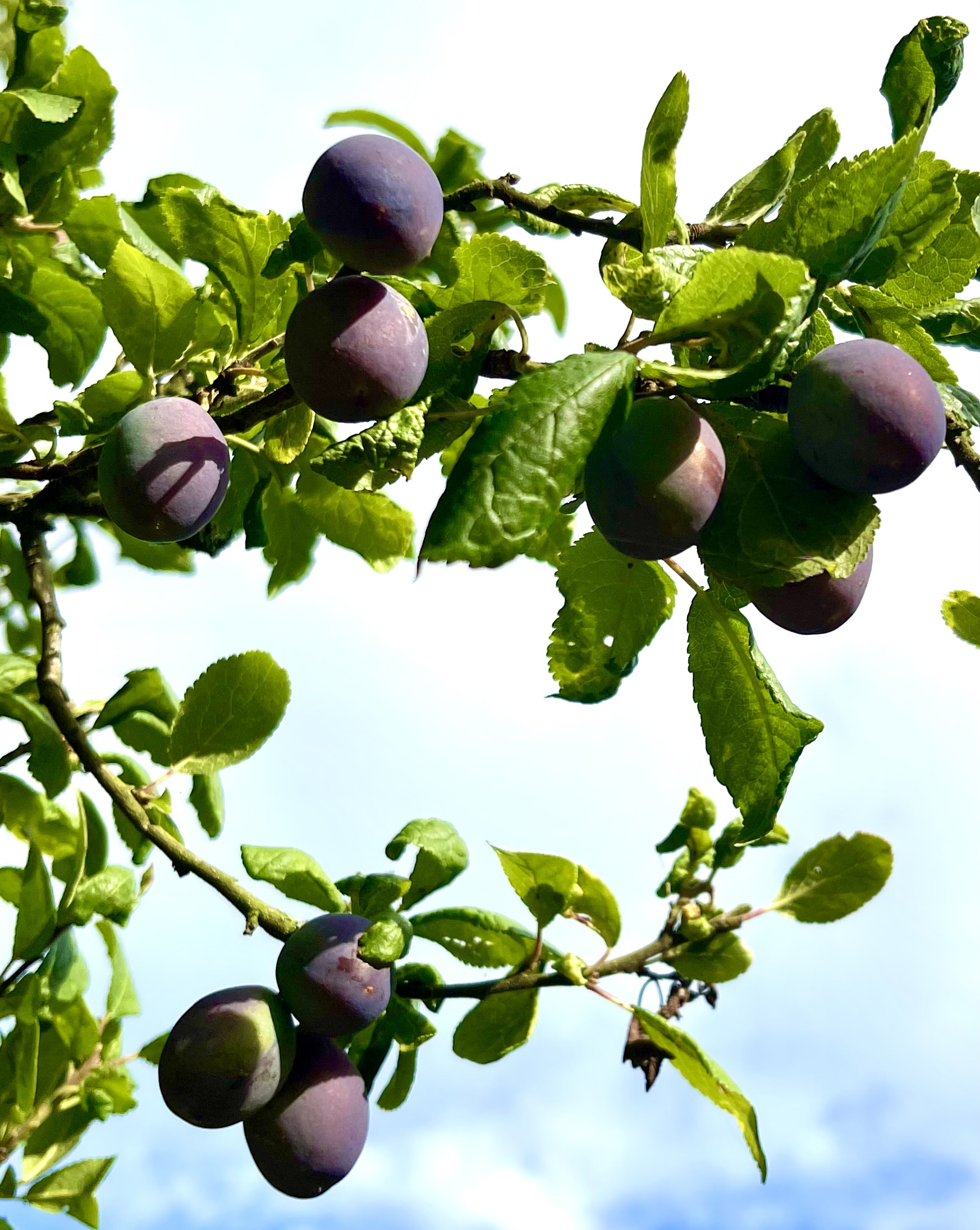
– Plums and damsons – often found on old, half-forgotten trees at the edges of gardens, allotments, and hedgerows, a legacy of decades of orchard planting. Damsons in particular are too sharp to eat much of raw, which is exactly why they’re made for the jam pot.
– Elderberries and rowan berries – never eaten raw, but transformed by cooking into syrups, cordials, and jellies.
– Hedgerow fungi – chanterelles, ceps, and puffballs start appearing as the ground cools and dampens, though this is the one category where real caution matters (more on that below).
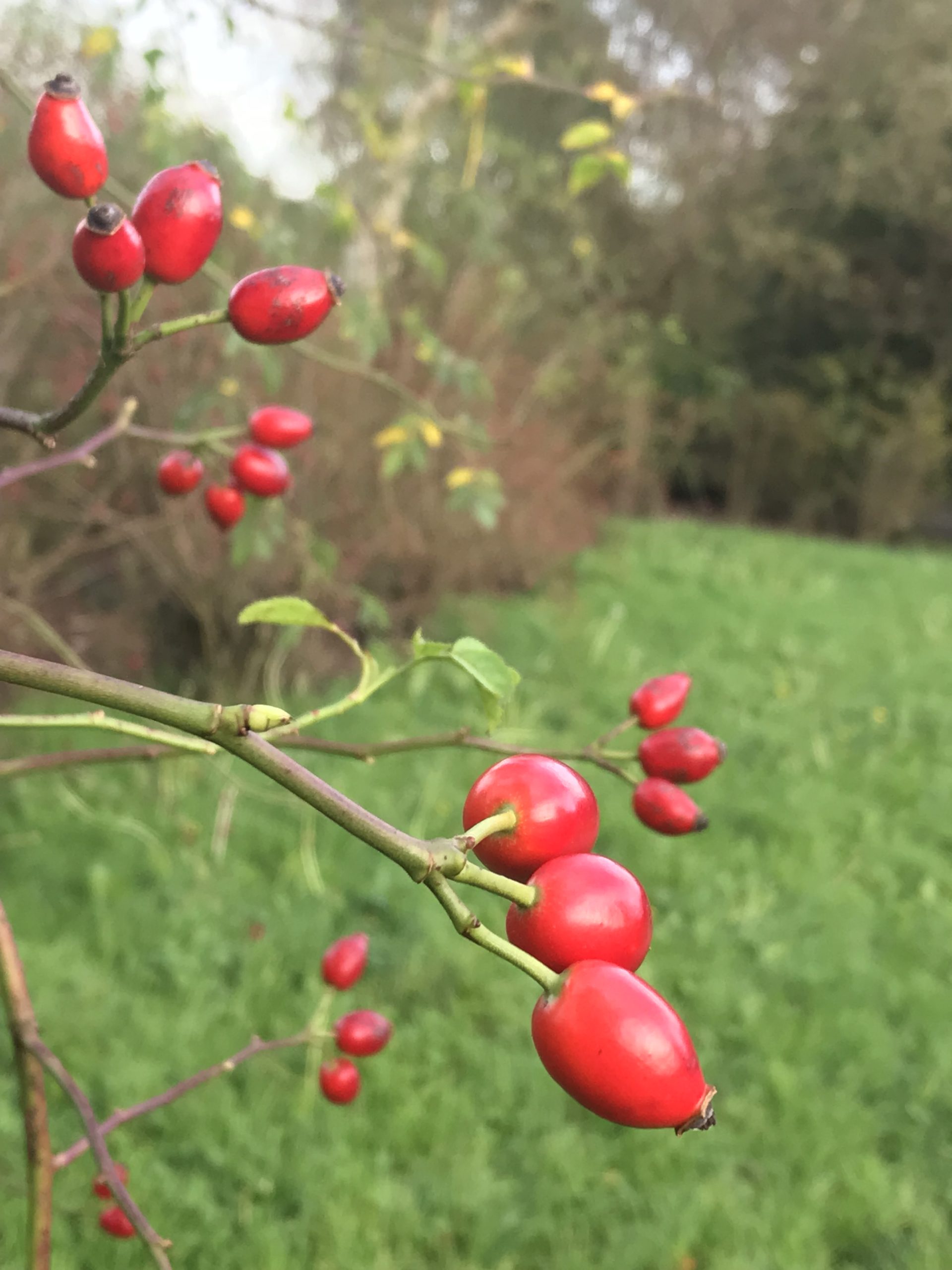
– Rosehip and hawthorn – less immediately tempting, but worked into syrups they’re some of the richest natural sources of vitamin C you’ll find growing wild.
Foraging Well: Leave Some for the Birds
There’s an old, simple rule that every good forager follows: take no more than a third of what you find, and leave the rest where it grows. Hedgerows aren’t just a larder for us – blackbirds, thrushes, fieldfares, squirrels, and hedgehogs depend on that same fruit to build up reserves before winter, and brambles and hedgerow trees are themselves important habitat, not just fruit dispensers. Picking generously rather than greedily is part of the ritual, not an inconvenience to it: it keeps the hedgerow abundant for next year, and for the wildlife that has no other pantry to raid.
A few practical habits make this easy:
– Pick from several bushes rather than stripping one clean.
– Reach past the first, dog-walking-height fruit, which tends to be dustier – go a little higher or deeper for cleaner berries.
– Use a shallow basket so fruit doesn’t crush under its own weight on the walk home.
– Only pick, eat, or identify fungi you are completely certain of. Some of the most toxic mushrooms in the UK closely resemble edible ones, and “if in doubt, leave it out” is the only rule worth memorising.
From Hedge to Pantry
The satisfaction of foraging really compounds once you get the day’s haul home. This is where the season turns into something you can hold onto past October:
– Jam and jelly are the obvious first stop— blackberries combine beautifully with apple or foraged crab apple, since both are naturally high in pectin and help the jam set without fuss.
– Fruit leathers and syrups are a good home for hawthorn and rosehip, which are far too sharp and pippy to eat straight off the bush.
– Freezing is the easiest preservation of all if you’re short on time as most hedgerow fruit freezes well and keeps its flavour for cooking through winter.
– Gifting a small jar of your own preserves, hand-labelled with the date and where you picked it, turns a walk into something that keeps giving for months. Few gifts say “I thought of you” quite like a jar of jam made from fruit you picked yourself.
The Health Case for Getting Out There
Autumn foraging lines up neatly with what your immune system actually needs as the seasons change. Blackberries, rosehip, and hawthorn are all naturally rich in vitamin C, which supports normal immune function – useful timing, given that vitamin C is exactly the nutrient most of us start reaching for once the first coughs and colds of the school term arrive. Getting it from a hedgerow walk rather than a supplement bottle comes with the added benefit of the walk itself: fresh air, daylight exposure during the darkening days, and the light-to-moderate exercise of wandering, reaching, and crouching that a good foraging session naturally involves.
There’s a mental health case too. Foraging asks you to slow your usual walking pace right down and actually look – at colour, at ripeness, at what’s growing where. That close, unhurried attention to your surroundings is close to a form of movement meditation, and it has the same grounding, present-moment quality that makes a walk in the woods feel so different from a walk on a treadmill.
A Simple Autumn Foraging Afternoon
– Check what’s in season locally and pick a route with hedgerows, woodland edges, or old orchards.
– Bring a basket, gloves for the brambles, and nothing that will rush you.
– Take no more than a third of what you find at each bush or tree.
– Come home and turn the day’s harvest into something simple – a jam, a syrup, a crumble – the same afternoon while everything’s still fresh.
– Set a jar aside for someone you love.
The hedgerows won’t wait indefinitely – a few weeks of good ripeness, and then it’s over until next year. That’s rather the point of a prescription like this one: it only works if you actually go outside and take it.