

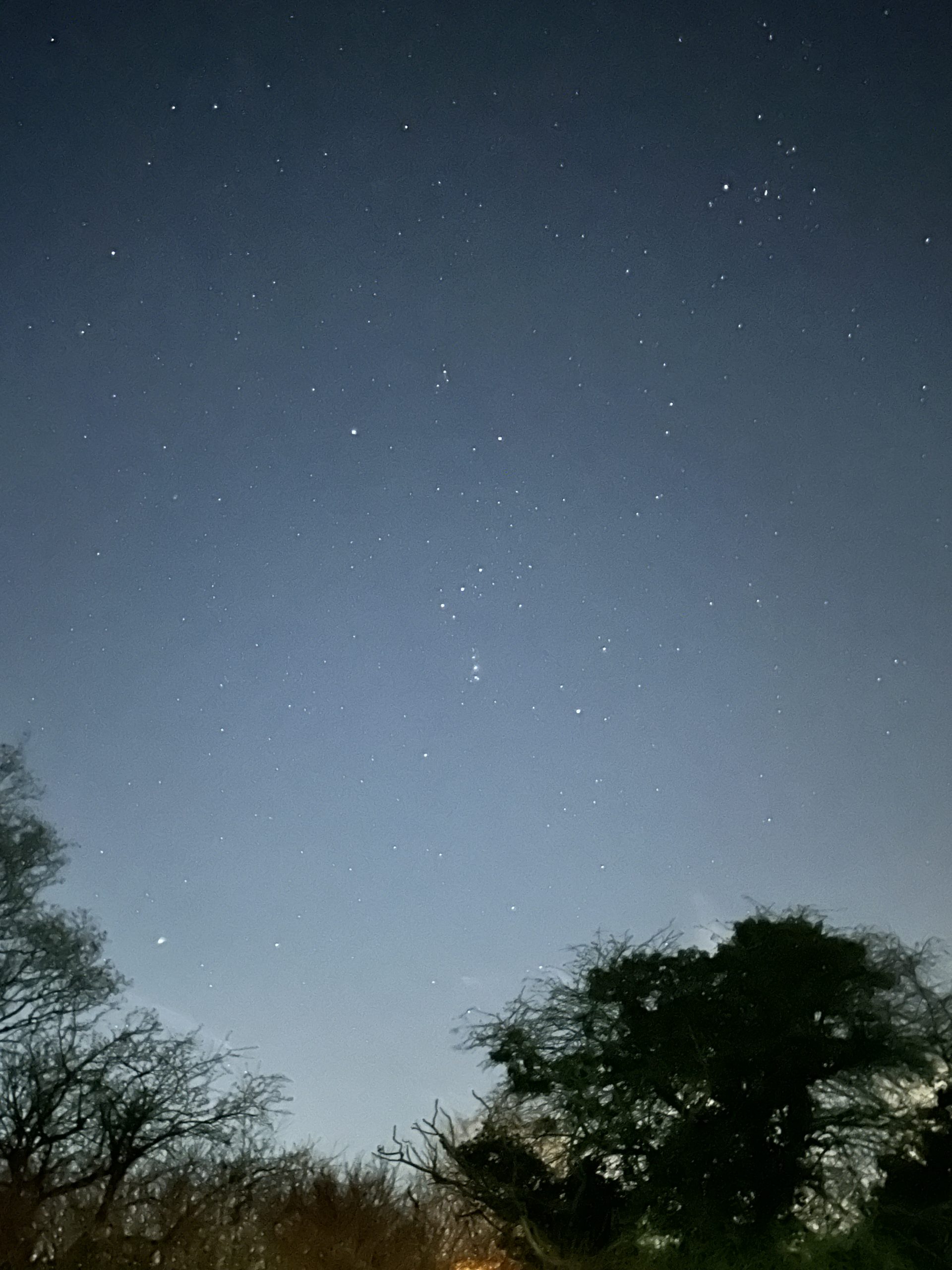
 How Connecting with Nature at Night Can Heal the Mind
There’s something ancient and sacred about standing under the stars. The stillness, the soft rustle of leaves, and the quiet immensity of the night sky draw us out of ourselves and into something vast and timeless.
In a world that pulls us into screens, noise, and endless to-do lists, reconnecting with the natural world—especially at night—offers a gentle, powerful antidote. And it’s not just poetic—it’s profoundly good for your mental health.
The Healing Power of Nature
Decades of research have confirmed that spending time in green spaces like forests or parks improves mood, reduces stress, and enhances overall well-being. Blue spaces like lakes, rivers, and coastlines have also been shown to offer similar benefits. There’s another kind of nature connection we often overlook: the night sky.
A recent study found that people who feel more connected to the night sky report better mental health and greater happiness. It turns out that simply stepping outside and looking up may be a medicine we’ve forgotten.
Stargazing as Mindful Medicine
Mindful stargazing invites you to slow down. You don’t need fancy equipment or deep astronomical knowledge. Just your presence.
When you look up with curiosity, that curiosity can lead to wonder—a gateway to awe. And awe, psychologists have discovered, has powerful effects on our mental health. It quiets self-critical thinking, dissolves ego, and connects us to something beyond our individual concerns. As meditation teacher Sharon Salzberg says, “Awe is the absence of self-preoccupation.” In those moments under the stars, we’re no longer the centre of the universe—we’re a part of it.
Why Nature at Night is Different
While daytime nature immersion stimulates the senses and grounds us, night-time brings a different quality: stillness. The absence of visual overload can be deeply calming to the nervous system. It naturally shifts us from fight-or-flight into rest-and-digest mode, soothing the body and calming the mind (Capaldi et al., 2015). When we engage with the night sky mindfully—without agendas or inner chatter—we enter a timeless space where healing can happen.
August Sky Guide: What to Watch For
This August, the cosmos is putting on a show. Here are a few events to draw you outdoors and into presence:
1. Perseid Meteor Shower (Peaks August 11–13)
One of the most beloved meteor showers of the year. Expect up to 60–100 meteors per hour under dark skies. Best viewed after midnight. No telescope needed—just a reclining chair, warm blanket, and patience.
2. Crescent Moon & Venus (Early August)
In the first week of August, catch the delicate crescent moon meeting Venus low in the western sky after sunset—a beautiful, calming sight.
3. Saturn at Opposition (August 27)
Saturn will be closest to Earth and fully illuminated by the Sun. If you have binoculars or a telescope, this is your chance to glimpse its iconic rings.