
 The harvest season makes a visit to the allotment a joy.
There’s always something to come back with for the pot: courgettes, onions, potatoes, leeks, peas, beans and beetroot. This is the time for roast veg, soups and stews. This week we enjoyed turning our bounty into a potato, leek and fennel bake. Fennel offers great health benefits being high in Vitamin C and antioxidants.
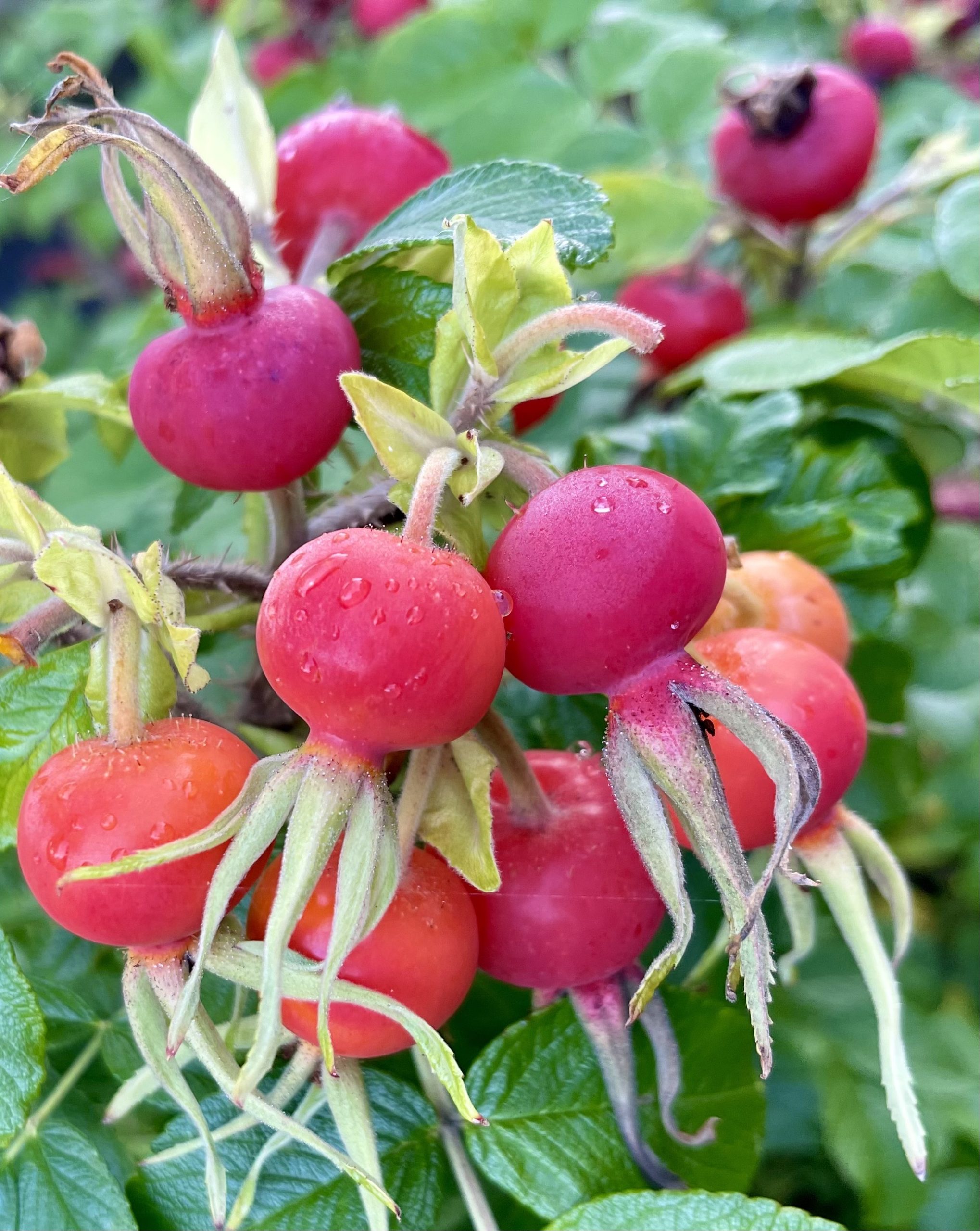
There’s still much to forage and this weekend we foraged rose hips, the fruit of the wild rose. All varieties of rose hips are edible and medicinal. Rose hips are easy to identify, especially if you can identify it as a rose earlier in the season when it’s in flower. Wild rose is commonplace and grows nearly everywhere. They can be a shrub or sometimes grow as a vine. Rose hips are extremely high in vitamin C, one of the highest natural sources. There is over 20 times more vitamin C in rose hip berries than oranges, making them very beneficial for the immune system. They can be used in a tea for this purpose.
We had our first hand in making rose hip syrup. Rose hip syrup has been used traditionally to keep colds and ‘flu at bay during winter. It also has natural anti-inflammatory properties and helps to ease the discomfort of arthritis. They are high in antioxidants, and can help the body rid itself of impurities. It’s really fun to forage, explore and experiment. The magic of nature is that it provides its natural nourishing and healing bounty at exactly the time we need it. Forage safely by consulting the Woodland Trust.