
Most of us know that drink more water is important to stay hydrated in summer. However it’s worth knowing that a significant portion of your daily hydration can actually come from your food, not just your glass. Fresh fruit and vegetables contain anywhere from 80% to 97% water, and eating them in season means you’re getting peak nutrition alongside that natural hydration boost. This summer, nature has done the planning for you.
Why seasonal matters in many ways
When produce is picked at the right time and grown close to home, it’s richer in vitamins, antioxidants, and phytonutrients. The flavour difference is noticeable too — and that matters, because when food tastes wonderful, you eat more of it.
If you can, visit your local farmers’ market this summer. What’s on those stalls right now has been grown for where you live, harvested at its best, and it hasn’t lost days or weeks of nutritional value getting to you.
Summer’s natural hydrators
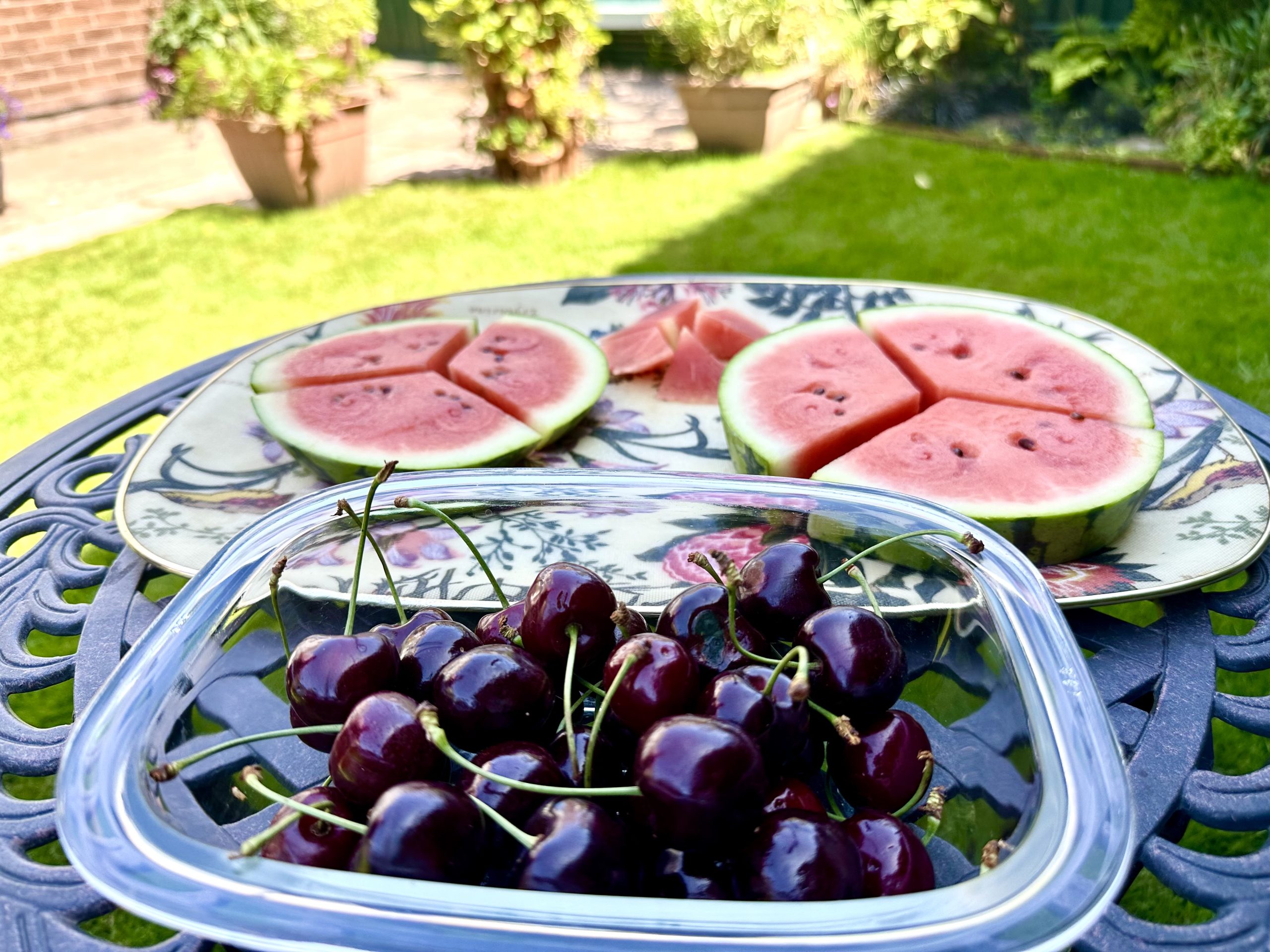
Watermelon is arguably the star of the season — around 92% water — and it brings so much more than refreshment. Research shows it supports heart health, liver health and has antioxidant, anti-inflammatory, and anti-diabetic properties. Cucumbers are similarly impressive, sitting at over 95% water content, making them one of the most hydrating foods you can eat.
Then there are tomatoes, which are the richest dietary source of lycopene — a powerful antioxidant linked to reduced risk of heart disease and cancer. Peaches bring antioxidant and anti-inflammatory benefits in every bite, while mangoes deliver soluble fibre, vitamins, minerals, and antioxidants in one of summer’s most vibrant packages.
Cherries and blackberries are both rich in polyphenols — plant compounds that support immunity, reduce fatigue, and may offer protection against diabetes and inflammatory conditions. Avocados, often thought of as a year-round staple, are actually a summer fruit, and they’re associated with improved gut health, better heart health, and a reduction in LDL cholesterol.
On the vegetable side, bell peppers are packed with flavonoids and polyphenols with anti-inflammatory benefits, carrots offer a powerful mix of carotenoids and polyphenols with anticancer and immune-supportive properties, and beetroot brings both antioxidant and anti-inflammatory action. These aren’t just side dishes — they’re functional foods in the truest sense.
Raw dishes that let summer shine
The best way to honour fresh seasonal produce is often the simplest — eating it raw or lightly dressed preserves the most nutrients and lets the natural flavours come through.
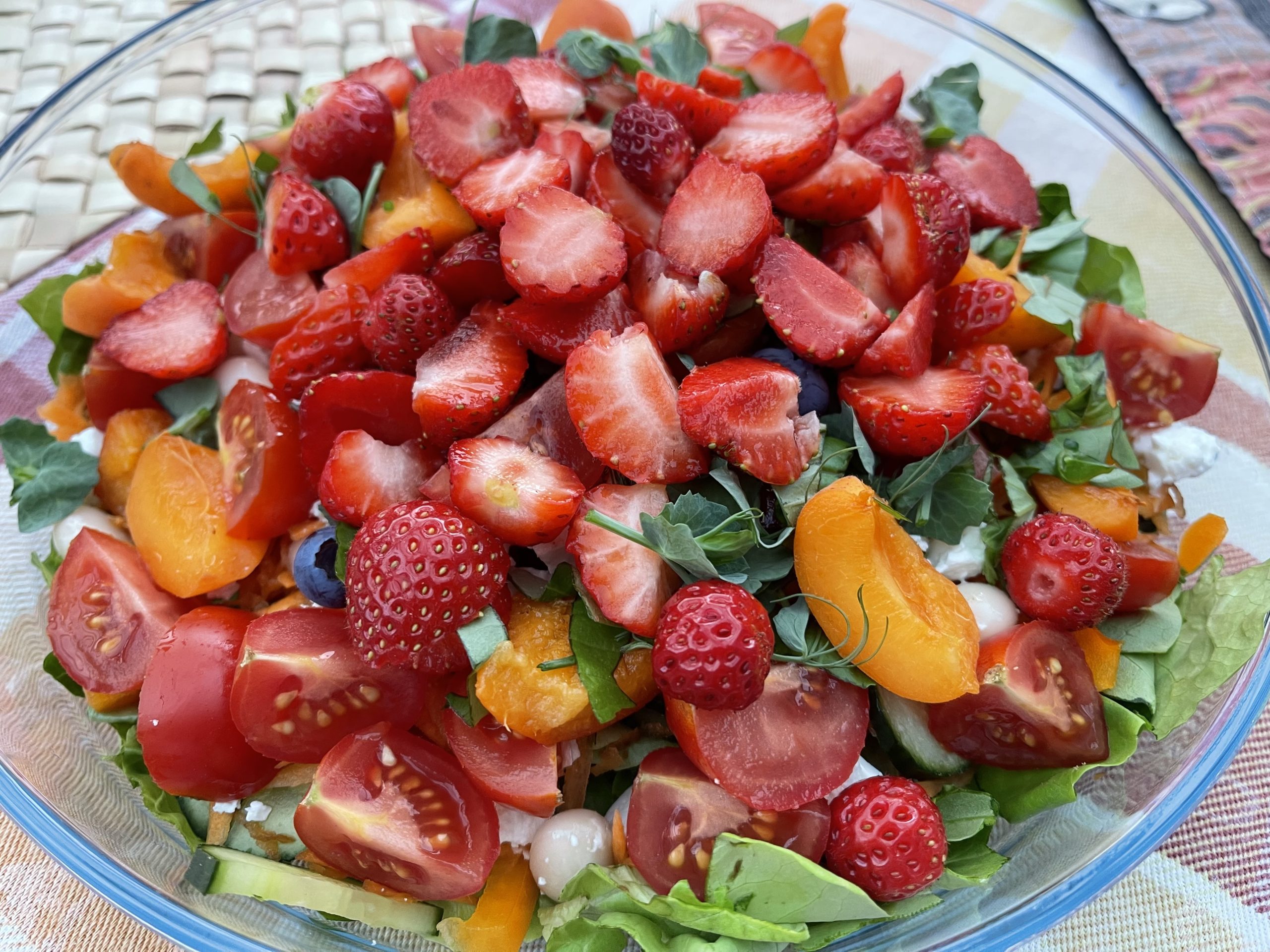
Here are a few ideas to inspire you:
- A summer chopped salad with cucumber, cherry tomatoes, bell pepper, raw corn cut straight from the cob, and fresh avocado — dressed with lemon juice, olive oil, and a handful of fresh herbs. Colourful, hydrating, and deeply nourishing.
- A watermelon and blackberry bowl with a squeeze of lime and fresh mint — as beautiful to look at as it is to eat, and naturally cooling on a warm day.
- A rainbow crudité plate with raw carrots, cucumber slices, and bell pepper strips alongside a tahini or avocado dip — ideal for grazing through the afternoon.
- A peach and tomato salad with basil, a drizzle of good olive oil, and a pinch of sea salt. This one surprises people every time, and it’s extraordinary when both are perfectly ripe.
- A fresh mango and avocado salsa with red onion, lime, and coriander — wonderful as a side, on top of fish, or just scooped up with whatever’s to hand.
A simple principle to carry with you
When you eat what’s in season, you’re eating what your body actually needs for that time of year. Summer produce is hydrating, cooling, rich in antioxidants, and designed — by nature — to support you through the heat. You don’t need to overhaul your diet or follow a complicated plan. Just start with what’s freshest and most colourful, and let the season guide you.
Your plate this summer can do far more than feed you. It can hydrate you, protect you, and delight you — one seasonal mouthful at a time.