
What Growing Your Own Food Really Feeds
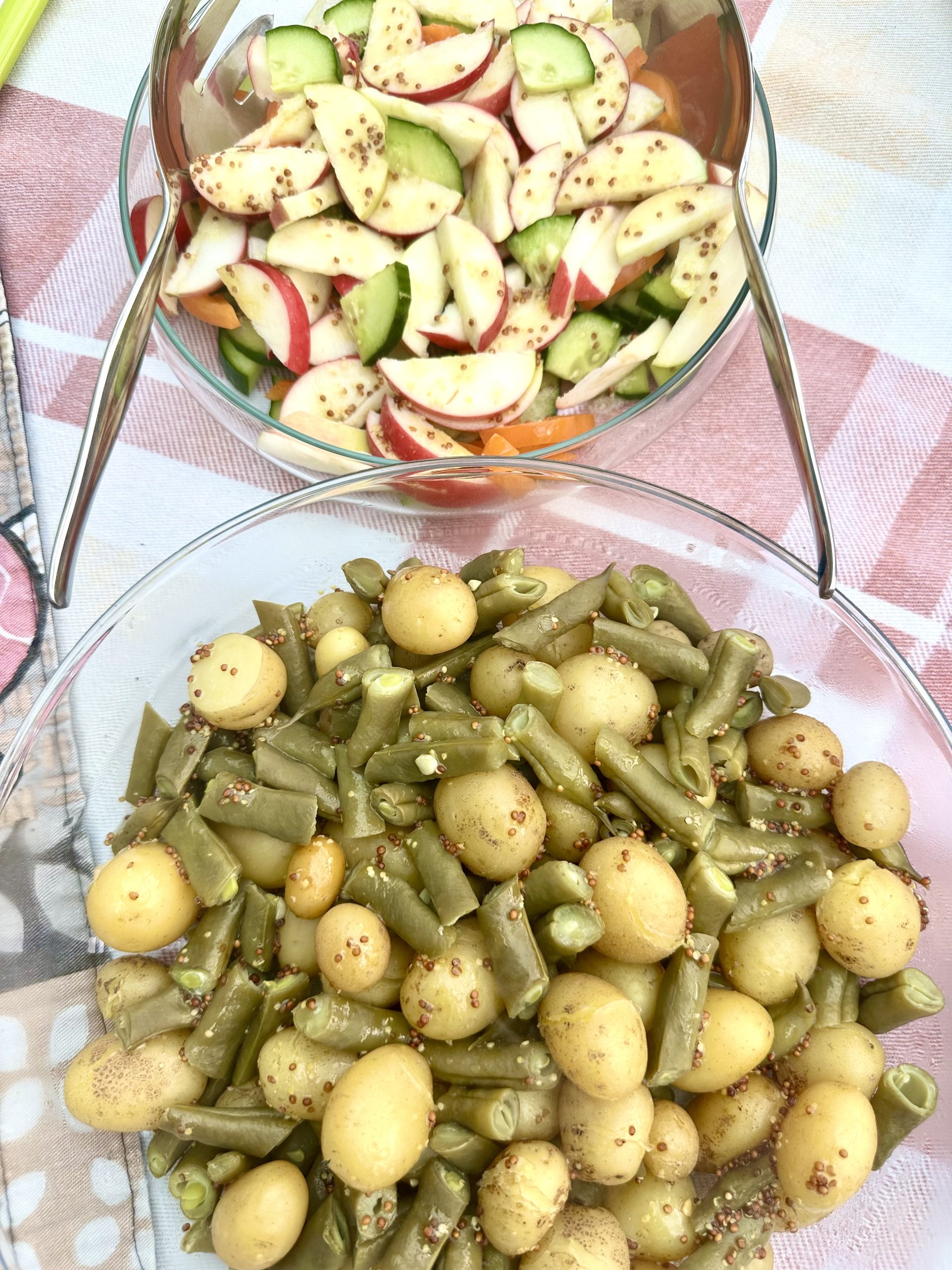
There’s a particular kind of joy that comes with harvest time. Not just the pleasure of eating something you’ve grown, but something quieter and deeper that ripens alongside the vegetables themselves.
Having an allotment isn’t always easy. There are challenges along the way, weather to contend with, weeds that seem to have a mind of their own, and the odd disappointment when something simply doesn’t take. But from midsummer right through the harvest season, there’s always something new to bring home to the kitchen. Picking just enough beans and peas for the week, pulling up a few beetroots, cutting a courgette still warm from the sun. These small moments bring a joy that goes far beyond the food itself.
This week we started digging up the first potatoes, and the onions, which have been drying gently in the sun, are almost ready to store. There’s something wonderfully grounding about that rhythm, working in step with the seasons.
The Benefits of Growing Your Own
Growing your own food gets you outside in the fresh air and gets the body moving. It also teaches you, in the most direct way possible, what’s actually in season. Eating fresh brings real benefits, both for health and for flavour, and it invites a different kind of creativity into the kitchen. Instead of deciding what to cook and then shopping for it, you look at what you’ve harvested and let the meal take shape around that.
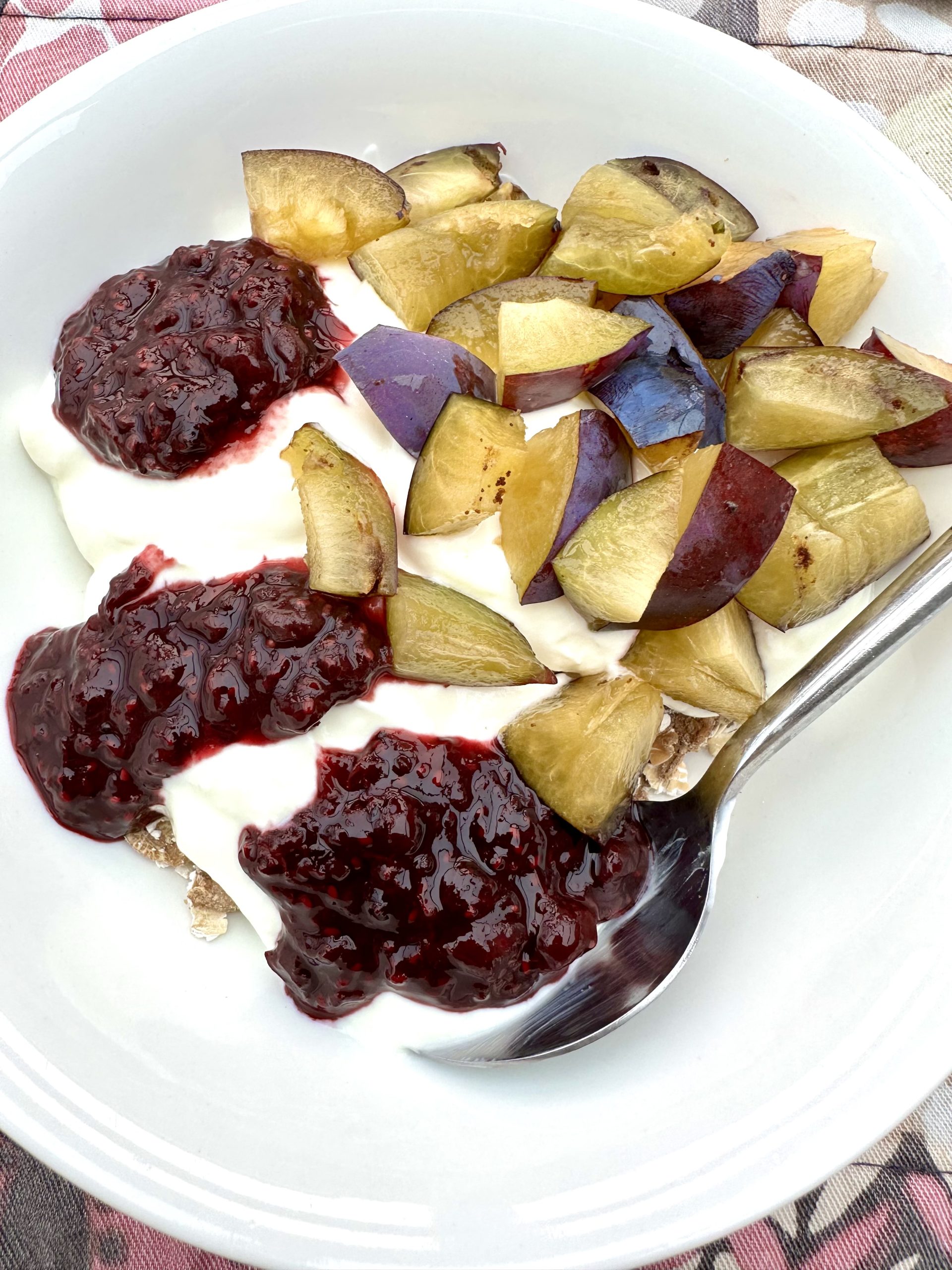 With the plums ripening now, breakfast has become yoghurt and fresh fruit, spooned over with the blackcurrant confit we made last month. Lunch is a garden salad, full of whatever’s ready that day, and in the evening the courgettes, onions and tomatoes find their way into a simple, satisfying pasta. None of it is complicated. All of it tastes like the season it came from.
Abundance, Shared
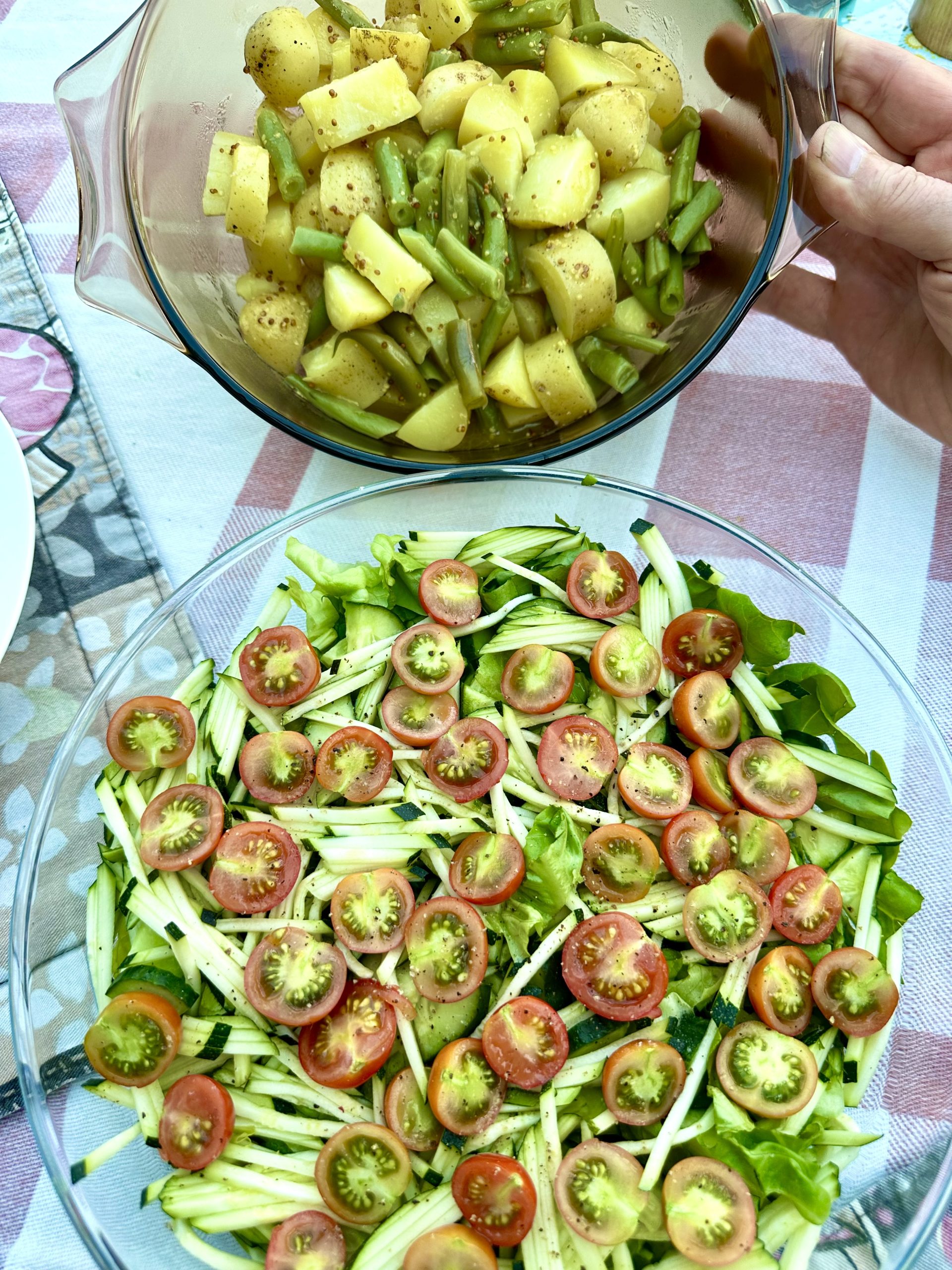
There’s a deep appreciation that grows alongside the vegetables, an appreciation for the goodness of nature and the abundance of the season. This week, fellow allotmenteers shared their cucumbers, tomatoes and pattypan squashes with us. In turn, we shared our plums, potatoes and onions with neighbours and family.
That simple exchange does something valuable. It gets people talking, interacting, sharing in the simple pleasure of tending to nature and watching it grow into fullness. Community gardening research points to exactly this, describing gardens as spaces of social networking and genuine intimacy with nature, benefits that ripple outward well beyond the plot itself. It’s a lovely reminder that growing food was never only about the food. It’s about connection: to the land, to the rhythm of the seasons, and to each other.
Research consistently backs up what allotment growers experience for themselves. A large questionnaire study of allotment gardeners in Tokyo found that, compared with non-gardeners, allotment holders reported better general health, fewer health complaints, better mental health and stronger social cohesion, even after accounting for other lifestyle factors. In the UK, a comparative study of allotment gardeners found lower perceived stress levels among older gardeners than similar-aged people attending indoor exercise classes, and linked access to a garden with better overall wellbeing. A broader review of the evidence has also found that gardening interventions are associated with reductions in depression, anxiety and loneliness, alongside greater life satisfaction, happiness and a sense of belonging. And there does seem to be a sweet spot. One study found that mental resilience peaked when people gardened for one to four hours a week, with related research suggesting even two to three sessions a week is enough to notice a difference.
If you have even a small patch of soil, a balcony, or access to a community plot, this might be your invitation to begin. You don’t need to grow everything. Even one courgette plant will teach you something about patience, abundance, and the quiet joy of eating in season.